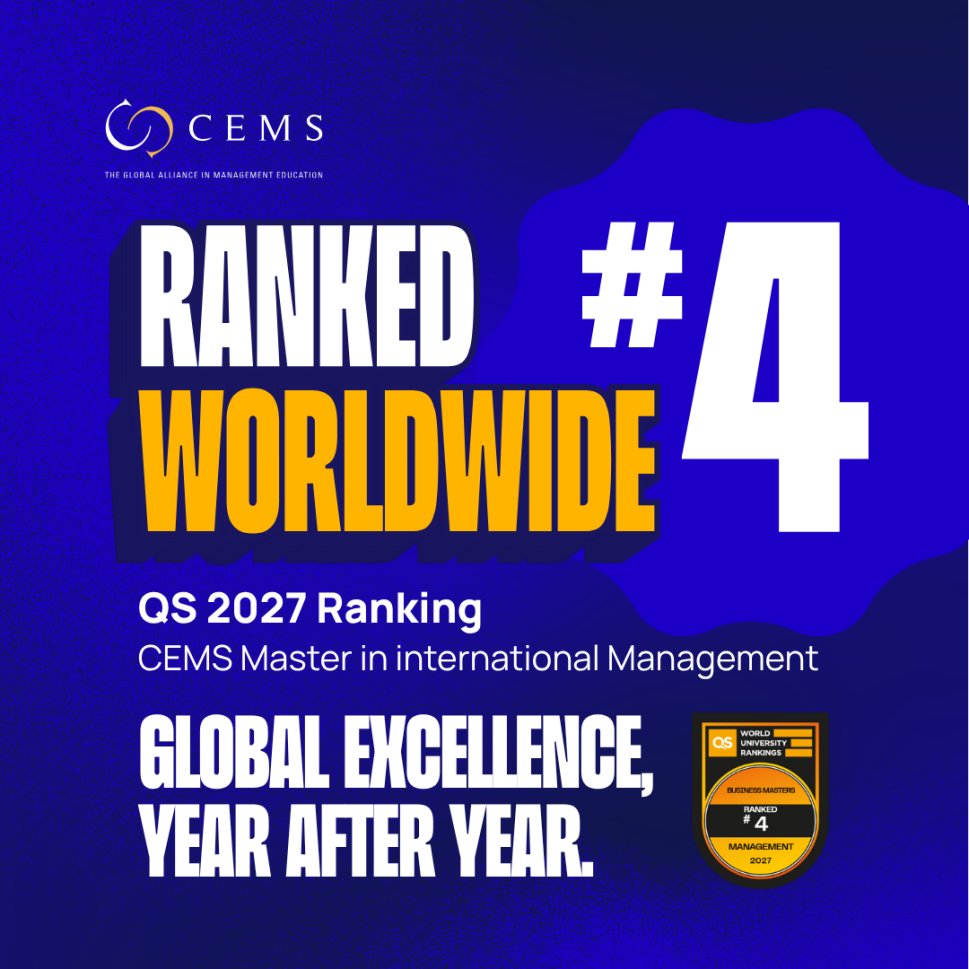
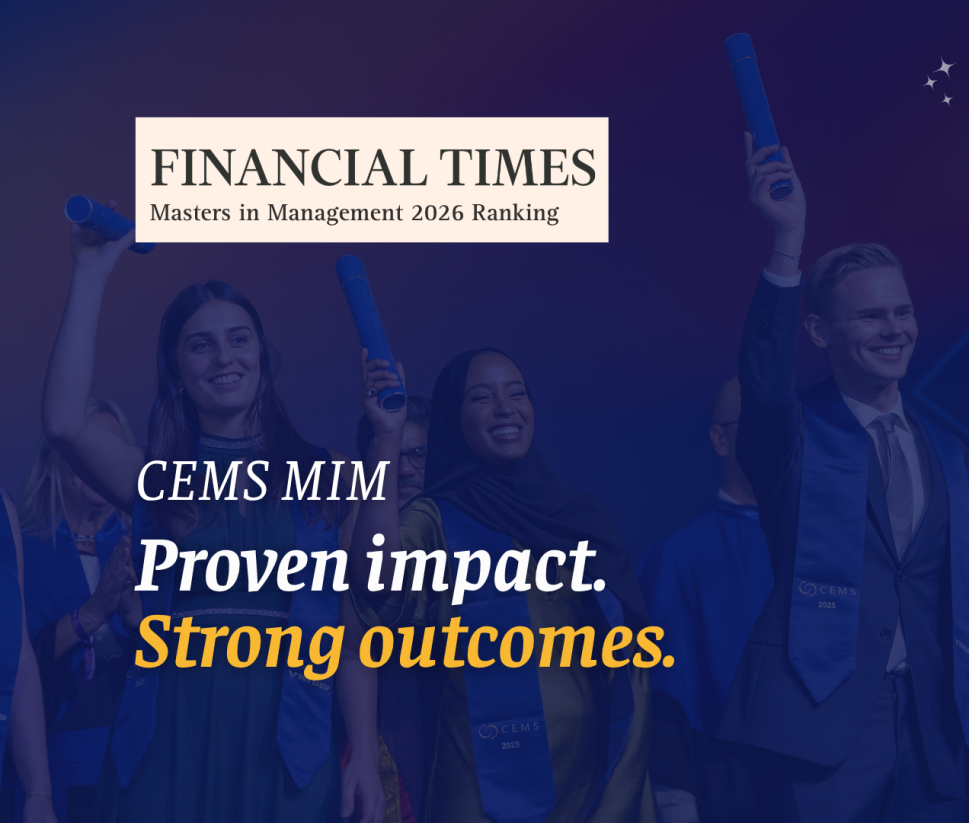
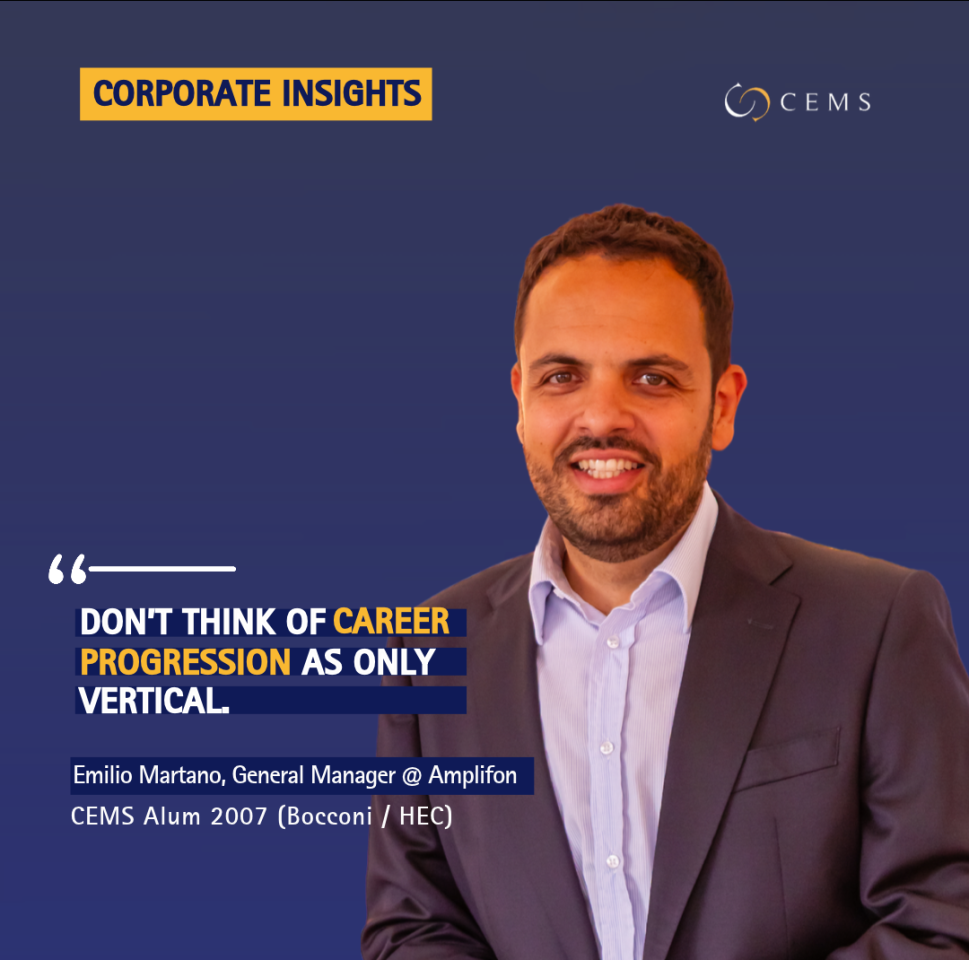
Ranking & Key figures


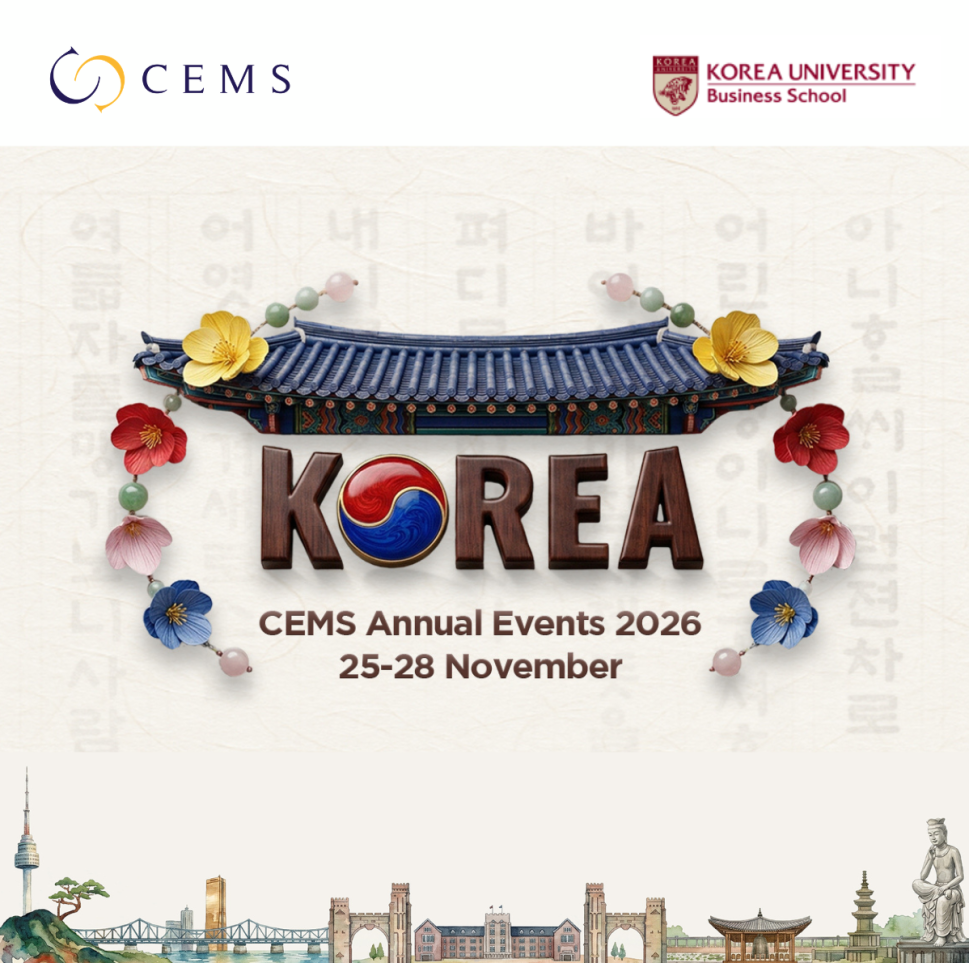
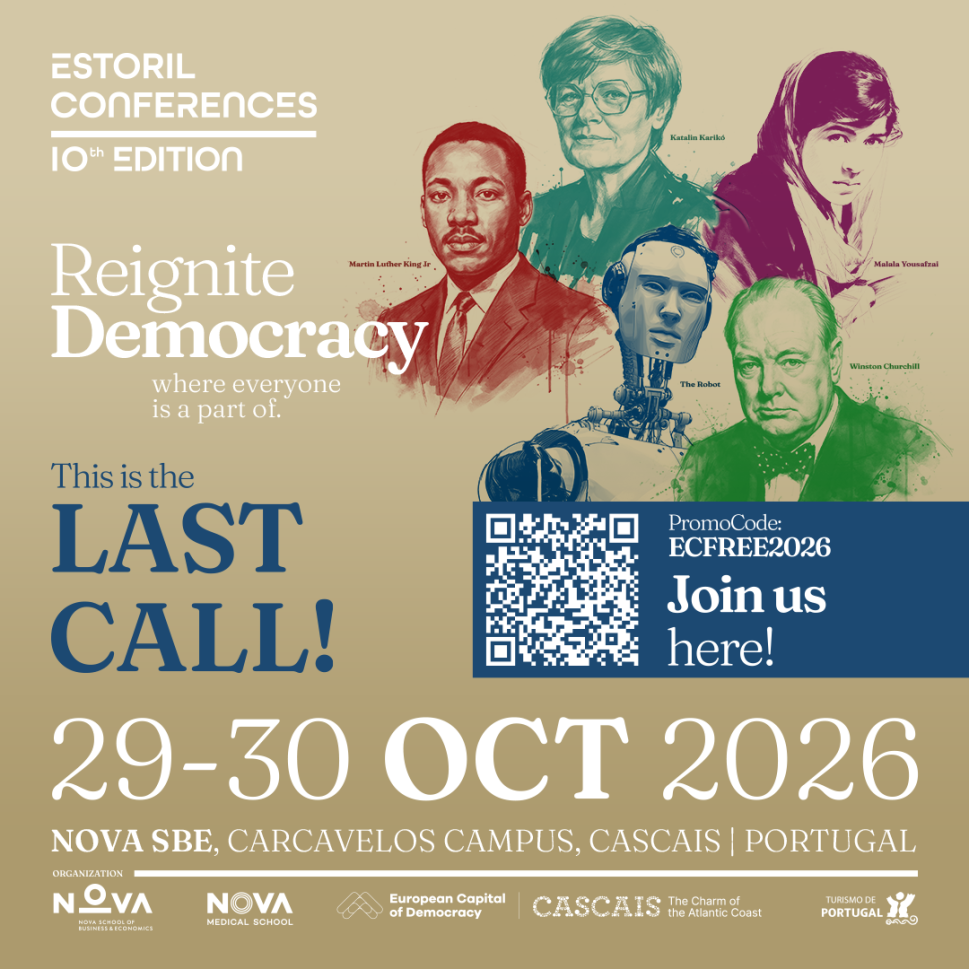
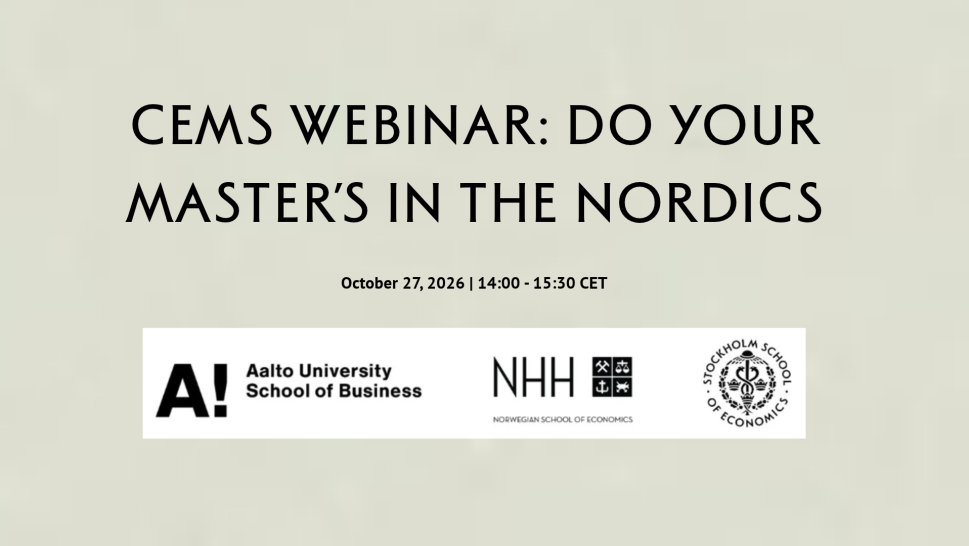
CEMS Events
27 October 2026
29 October
-
30 October 2026
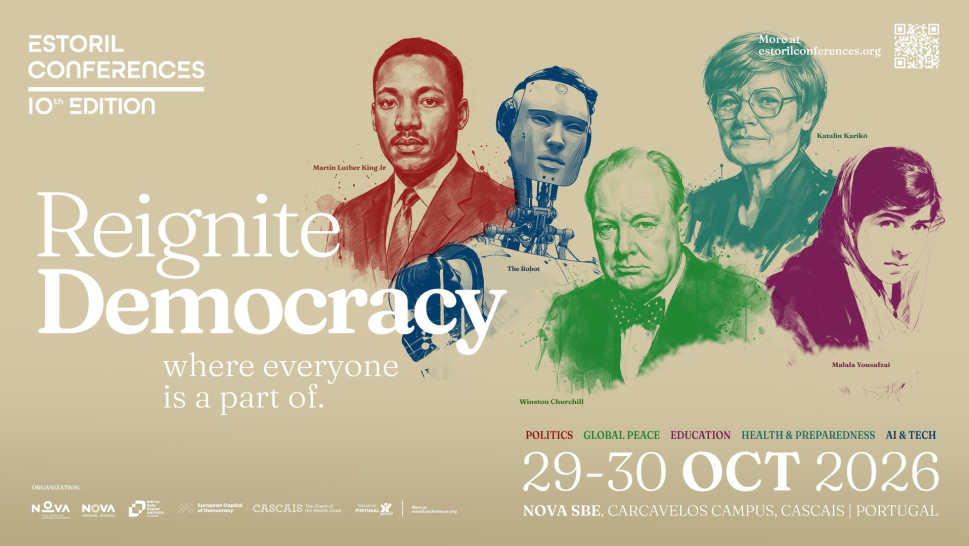
4 November
-
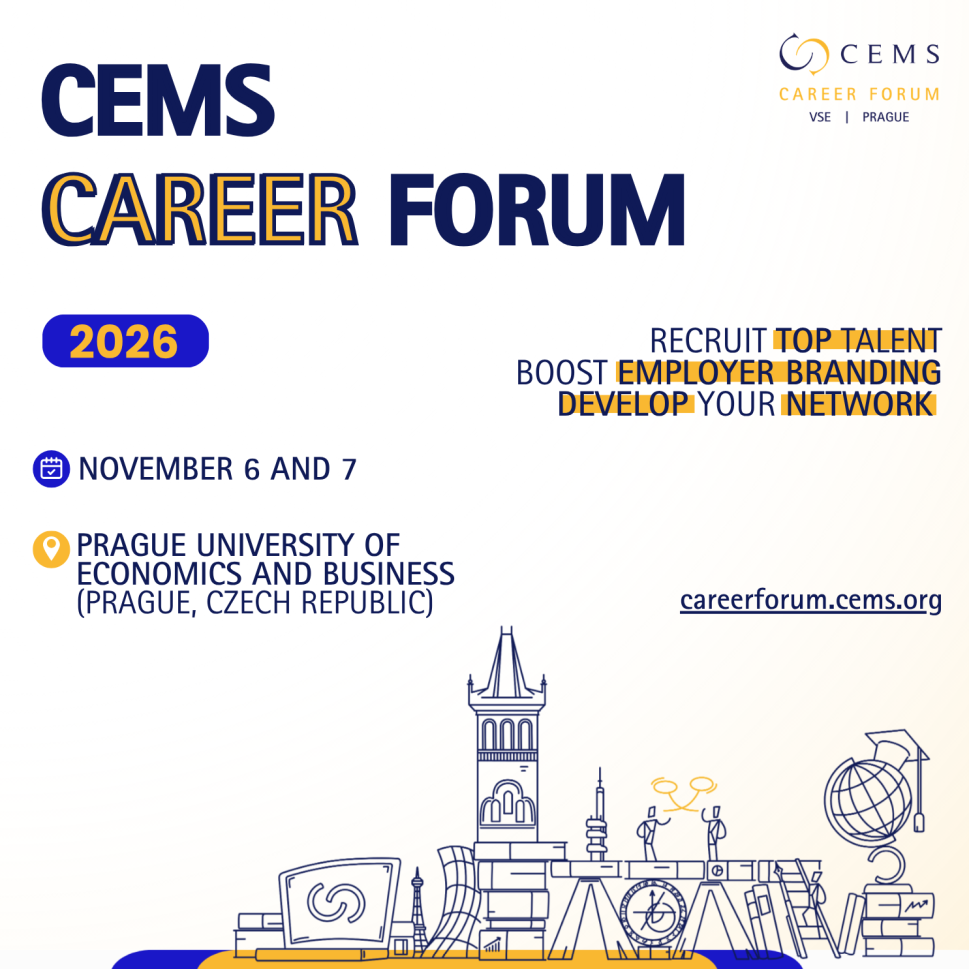
6 November 2026
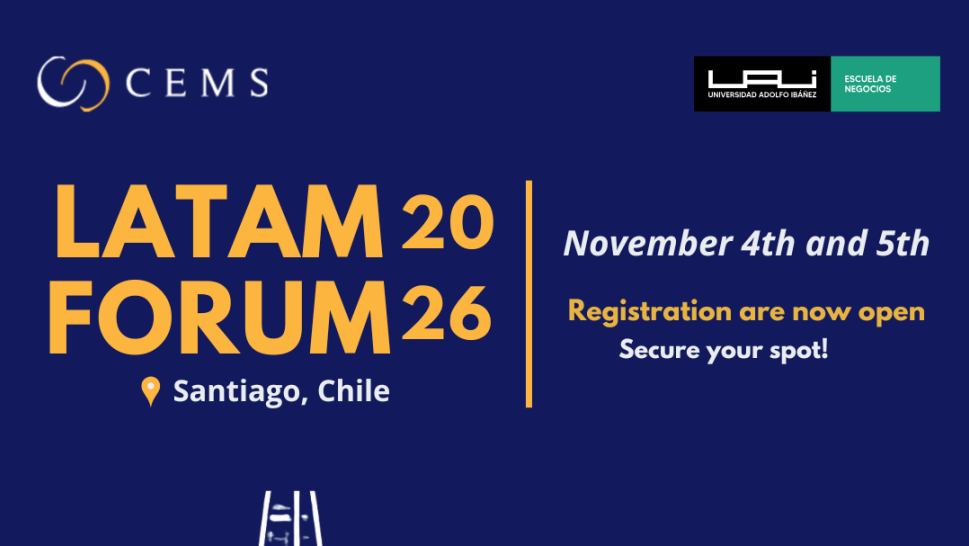
6 November
-
7 November 2026
7 November 2026

27 October 2026
29 October
-
30 October 2026
4 November
-
6 November 2026
6 November
-
7 November 2026
7 November 2026
Corporate & Social Partners








News & Stories

CEMS Club Presidents Gather at at Rotterdam School of Management
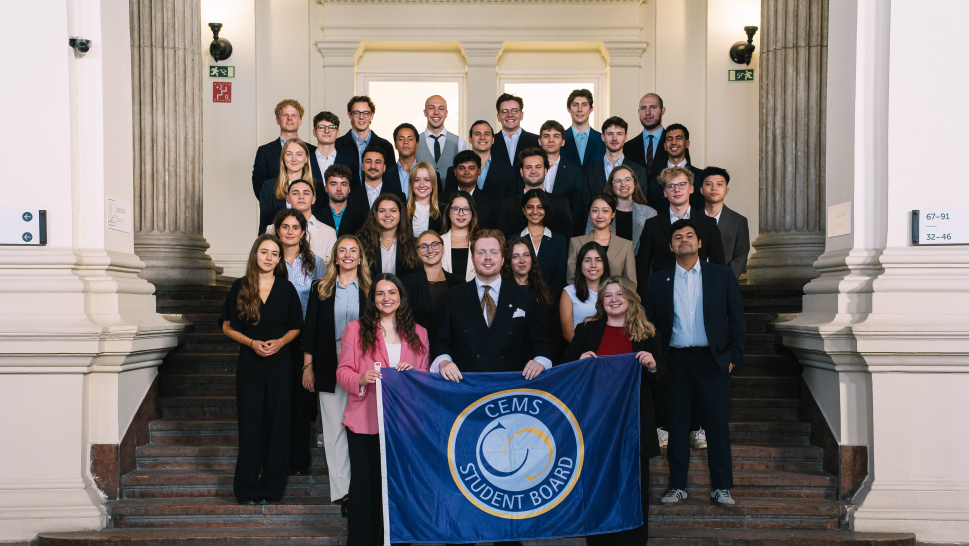
Student Board Takeaways from Budapest
CEMS Club Presidents Gather at at Rotterdam School of Management
Student Board Takeaways from Budapest


Alumni of Impact & Purpose - Rossella Campaniello
Thought Leadership
A new organisational model to promote entrepreneurial finance: Business Angel Platforms
Angel investing is no longer confined to local networks, closed circles and face-to-face relationships, as digital platforms are beginning to reshape how investors and start-ups find, assess and support one another. Giuliano Sansone of University College Dublin, together with colleagues from other universities, Davide Viglialoro, Elisa Ughetto and Paolo Landoni, investigate Business Angel Platforms, or BAPs, as an emerging model connecting investors and start-ups through structured digital infrastructure.
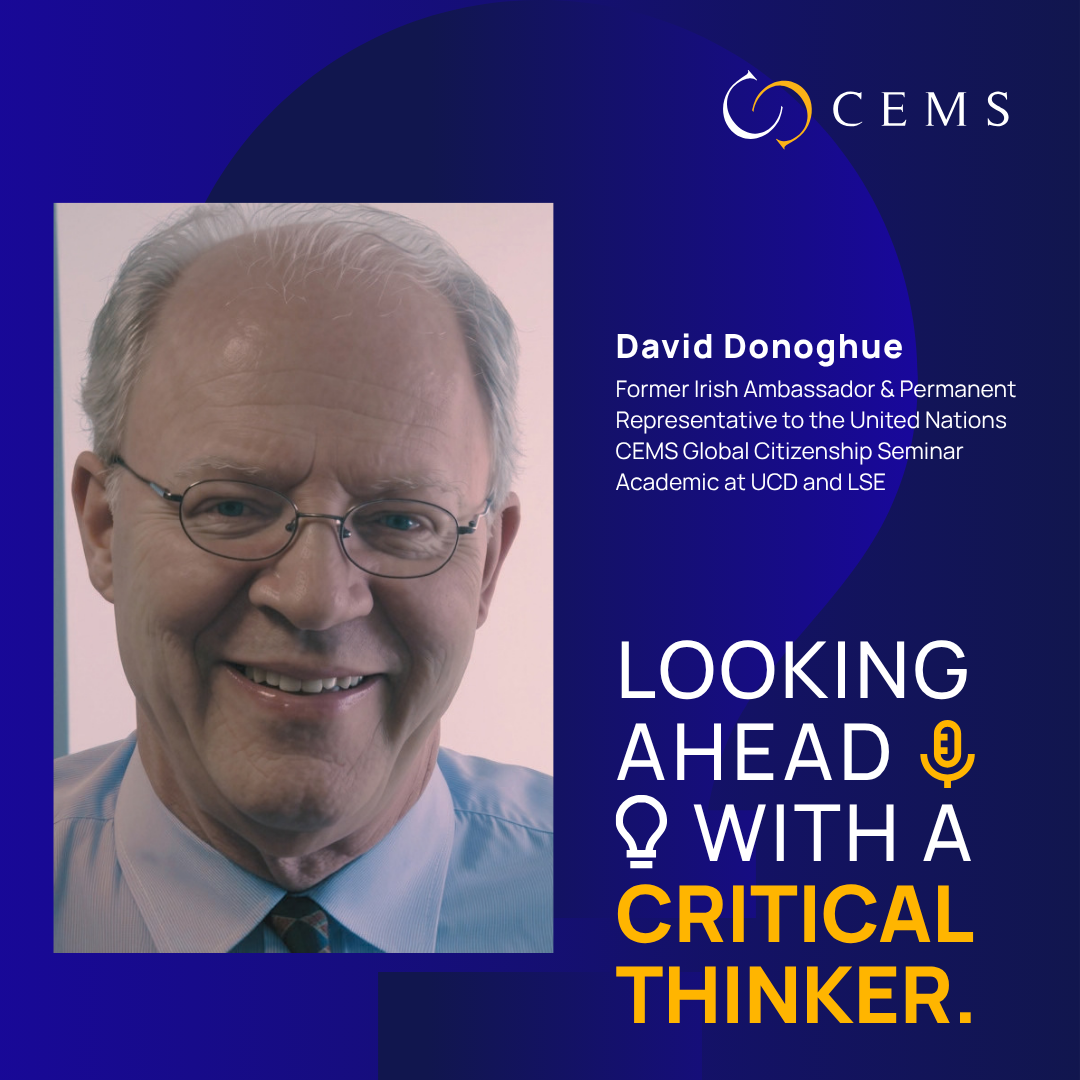
CEMS PODCAST | David Donoghue on the art of consensus
The world has no shortage of challenges – or ambitious plans to tackle them. But how do you go about addressing inequality, conflict or climate change that is happening in real time, when action means getting countries, governments, businesses and people with profoundly different interests to align and move in the same direction?
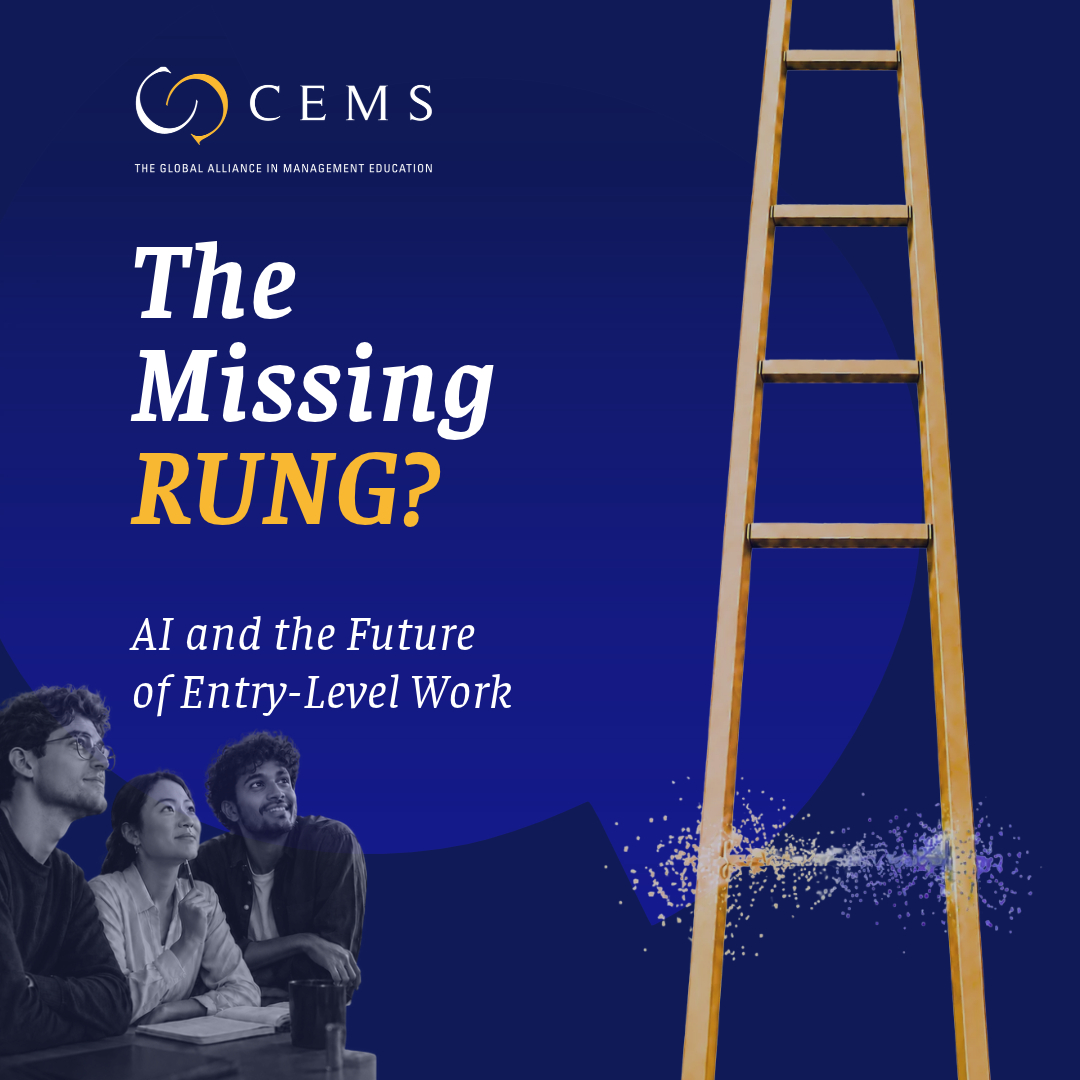
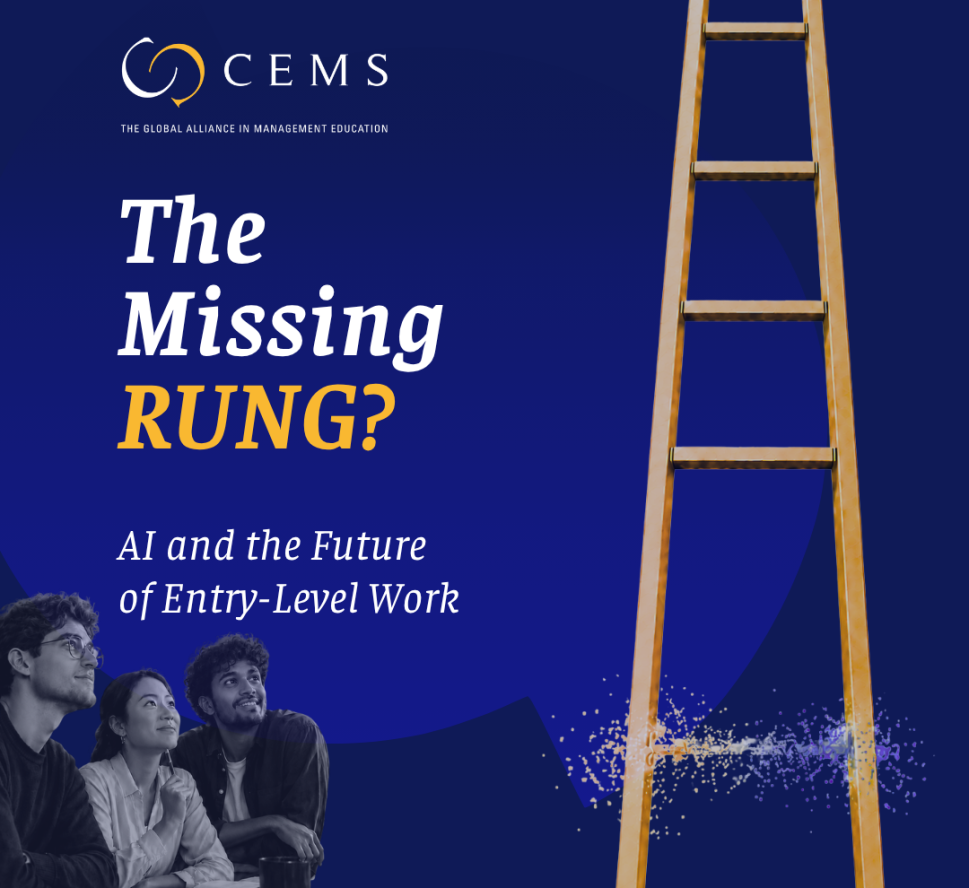
New CEMS AI Insight Report: The Missing Rung: AI and the Future of Entry-Level Jobs
Keep hiring graduates, or risk the next generation of responsible global leaders! Companies that cut entry-level hiring in favour of AI risk breaking the pipeline through which they grow responsible, innovative leaders, and eroding the culture that takes many years to build, argue contributors to a major new global report from CEMS, the Global Alliance in Management Education.
From Values to Action: Consumer Wisdom and the Dynamics of Sustainable Consumption
At the heart of this study is a familiar but unresolved sustainability challenge: the gap between consumers’ environmental values and the choices they make in everyday life. The study is authored by Carlos A. Trujillo of the Universidad de los Andes School of Management in Colombia and Michael Luchs of the Raymond A. Mason School of Business at William & Mary in the United States.
How Governments Can Break Oil Dependence
Drawing on research by HEC Paris Professors Sam Aflaki and Andrea Masini, together with Syed Abul Basher, this article examines how governments can create the right conditions for renewable energy innovation and adoption.
A new organisational model to promote entrepreneurial finance: Business Angel Platforms
Angel investing is no longer confined to local networks, closed circles and face-to-face relationships, as digital platforms are beginning to reshape how investors and start-ups find, assess and support one another. Giuliano Sansone of University College Dublin, together with colleagues from other universities, Davide Viglialoro, Elisa Ughetto and Paolo Landoni, investigate Business Angel Platforms, or BAPs, as an emerging model connecting investors and start-ups through structured digital infrastructure.
CEMS PODCAST | David Donoghue on the art of consensus
The world has no shortage of challenges – or ambitious plans to tackle them. But how do you go about addressing inequality, conflict or climate change that is happening in real time, when action means getting countries, governments, businesses and people with profoundly different interests to align and move in the same direction?
New CEMS AI Insight Report: The Missing Rung: AI and the Future of Entry-Level Jobs
Keep hiring graduates, or risk the next generation of responsible global leaders! Companies that cut entry-level hiring in favour of AI risk breaking the pipeline through which they grow responsible, innovative leaders, and eroding the culture that takes many years to build, argue contributors to a major new global report from CEMS, the Global Alliance in Management Education.
From Values to Action: Consumer Wisdom and the Dynamics of Sustainable Consumption
At the heart of this study is a familiar but unresolved sustainability challenge: the gap between consumers’ environmental values and the choices they make in everyday life. The study is authored by Carlos A. Trujillo of the Universidad de los Andes School of Management in Colombia and Michael Luchs of the Raymond A. Mason School of Business at William & Mary in the United States.
How Governments Can Break Oil Dependence
Drawing on research by HEC Paris Professors Sam Aflaki and Andrea Masini, together with Syed Abul Basher, this article examines how governments can create the right conditions for renewable energy innovation and adoption.
Follow Us