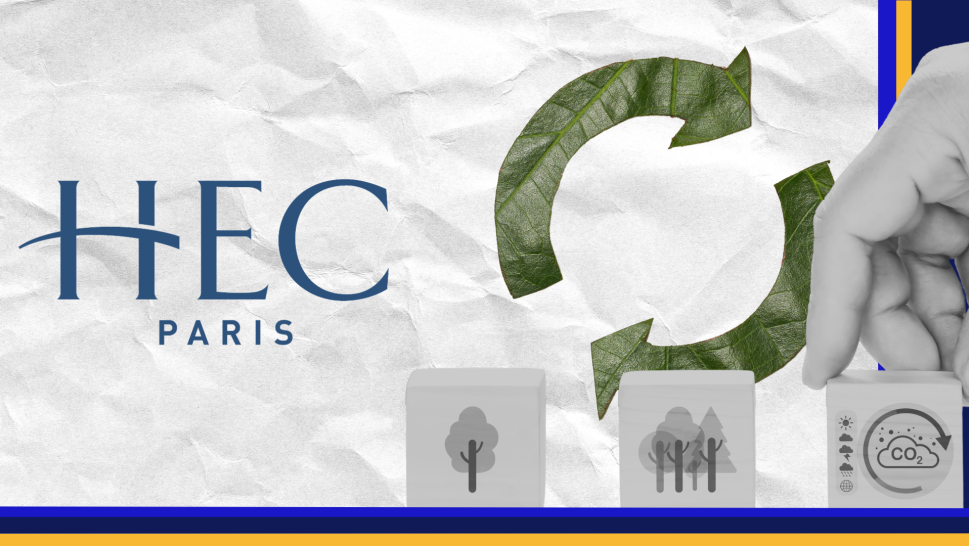
How Governments Can Break Oil Dependence offers a timely and policy-relevant introduction to the renewable energy transition, presenting it not only as an environmental challenge but as a matter of energy security, economic resilience and strategic independence. The piece draws on HEC Paris research by Professors Sam Aflaki and Andrea Masini, with Syed Abul Basher, and builds on a study of 15 European Union countries to examine how governments can more effectively support renewable energy innovation and diffusion. Its key contribution is to move the discussion beyond crisis response and towards a more structured understanding of how public action shapes long-term transition pathways.
The central outcome of the research is clear: no single lever is sufficient. Public investment in research and development helps generate innovation, but its effects on market uptake take time to emerge. Demand-pull mechanisms such as feed-in tariffs, quotas, subsidies and related support schemes can strengthen both innovation and diffusion, yet their effectiveness depends heavily on policy consistency, since volatility tends to discourage investment and slow adoption. Economic growth also matters, though in a more specific way, as it appears to support the wider diffusion of renewable energy once countries reach a certain level of affluence, while doing far less on its own to stimulate radical innovation.
Overall, the article matters because it presents the energy transition as a question of institutional design rather than technological optimism alone. For scholars and students, especially those interested in sustainability and sustainable business models, it shows that durable transition depends on how innovation, regulation and market conditions are aligned over time. In that sense, the piece is valuable because it reframes progress in renewable energy as the product of a coherent policy mix, one that supports experimentation, reduces uncertainty, and enables cleaner business models to scale in credible and economically viable ways.
FULL ARTICLE HERE