Wind turbines, solar panels, batteries and electricity grids all depend on materials such as lithium, cobalt, copper, silicon and rare earth elements. As investment in renewables grows, so does exposure to where these raw materials come from, how secure their supply is and what happens when prices or geopolitical conditions change.
As an energy company investing heavily in renewables, this is far from an abstract question for EDP. Understanding its exposure to critical raw materials, and anticipating potential disruption, is therefore becoming an increasingly important strategic issue.
That was the challenge taken on by five CEMSies: Constança Almeida (Nova), Maria Dominguez (Nova), Lara Kronacker (UCT), Amanda Rahmani (Aalto), and Luísa Roque de Pinho (Nova). They worked under the guidance of Academic Advisor Professor Rodrigo Tavares, alongside EDP Business Advisors Ana Júlia Marques de Oliveira Pinto and Nuno Joia.
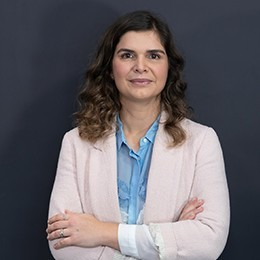
“What impressed us most was the students’ ability to quickly understand a complex and evolving business challenge and translate it into a clear, structured and practical analysis.”
Ana Júlia Marques de Oliveira Pinto, Head of Circular Economy and ESG Value Chain at EDP.
Turning a complex risk into something EDP could use
The team’s task was not simply to map where critical materials came from. They needed to understand what those dependencies could actually mean for the business.This was no classroom exercise! The team operated as a small consulting group. Their work combined market research, regulatory analysis, peer benchmarking and interviews with EDP and industry experts. They looked at risks ranging from human rights and geopolitical instability to supply concentration, scarcity, regulation and price volatility.
Then they brought those strands together in an interactive risk dashboard.
The tool enables EDP teams to compare sourcing countries, assess the risks associated with individual materials, estimate potential financial exposure and stress-test supply chains against disruption scenarios. In other words, it translates a broad global issue into questions procurement and strategy teams can act on: Where are we most exposed? What could that exposure cost? What alternatives do we have?
Becoming EDP's go-to experts in five months
At the very first meeting, their academic advisor, Professor Rodrigo Tavares of Nova SBE asked the students what they knew about critical raw materials - and then invited them to look around the room and identify objects that contained them. By the end of the project, he told them, they would know the subject inside out.
He was right. "If you'd asked me a year ago to tell you about critical raw materials, I had no clue," says Constança Oliveira e Silva, who had ranked the project as her first choice. "I couldn't imagine I'd know that much about it."
For Professor Tavares, the ambition was to change how such risks are seen. "We wanted the team to treat raw material risk not as a purely operational issue, but as a strategic business challenge," he says.
Learning fast!
The team was deliberately mixed, five women from different countries and academic backgrounds, from economics to mathematics to engineering. That range shaped the work, and when one of them got stuck, they worked through it together.
The challenge became particularly clear around the mid-term review. A first version was not enough: EDP pushed the team further, and the students had to challenge the existing framework. What EDP wanted had never been done before, and the team had to invent their own way to build it.
"We were navigating in the dark," Constança recalls. "We thought we were hitting a wall, then found a way to open a door and go through it."
Seeing the work land
By the final presentation, the project had attracted attention well beyond the original working group. A presentation initially intended for a small audience filled with EDP colleagues the students had not met before; two weeks later, they presented their work again to around 30 people from across the company.
For Constança, that made the effort feel very real, and shaped the advice she would give the next group of CEMSies:
"My advice to any student is to choose the hardest project," she says. "It's the one that pushes you furthest out of your comfort zone, and the one you learn the most from."
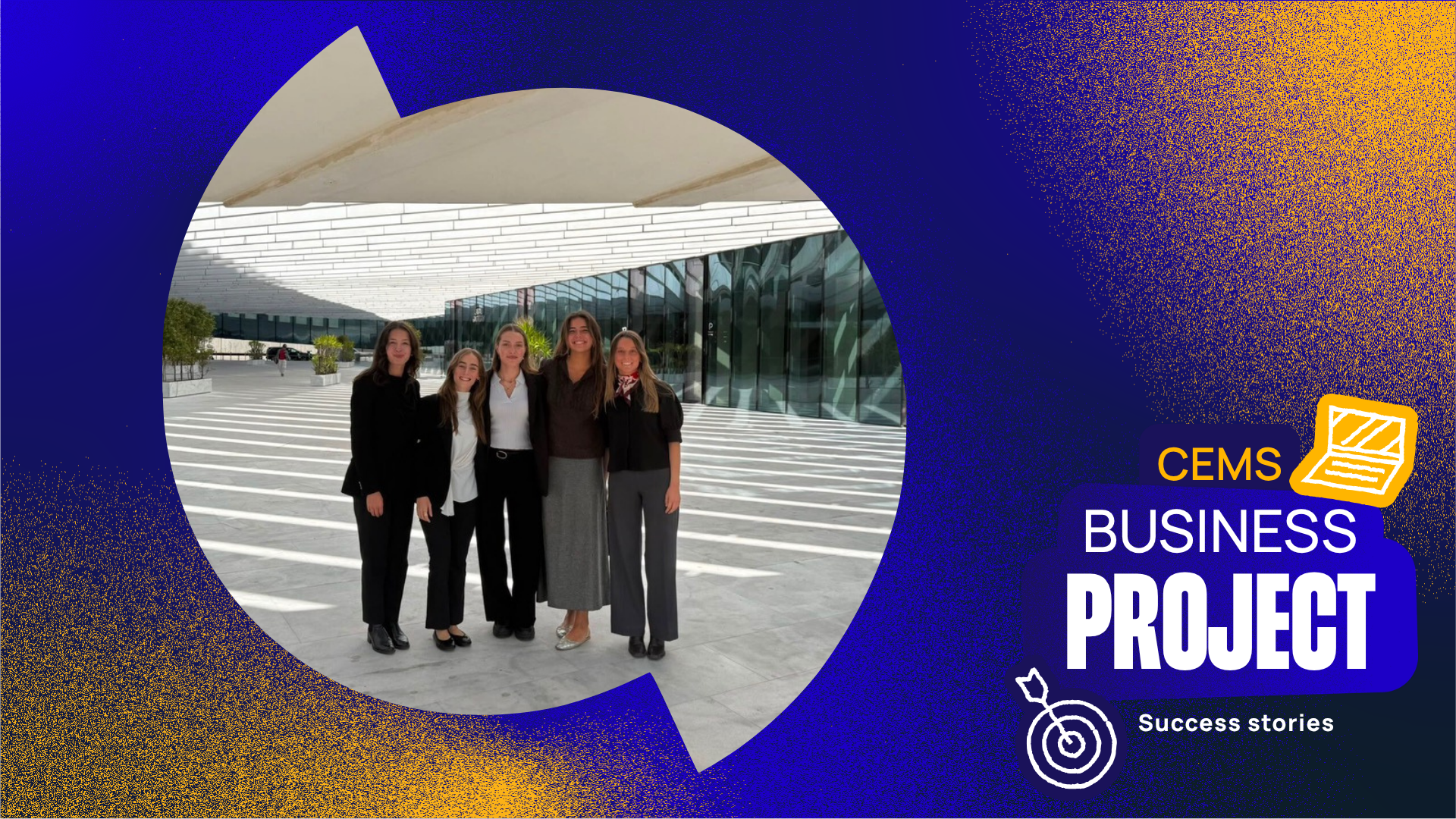
CEMSies: Constança Almeida (Nova), Maria Dominguez (Nova), Lara Kronacker (UCT), Amanda Rahmani (Aalto), and Luísa Roque de Pinho (Nova)